
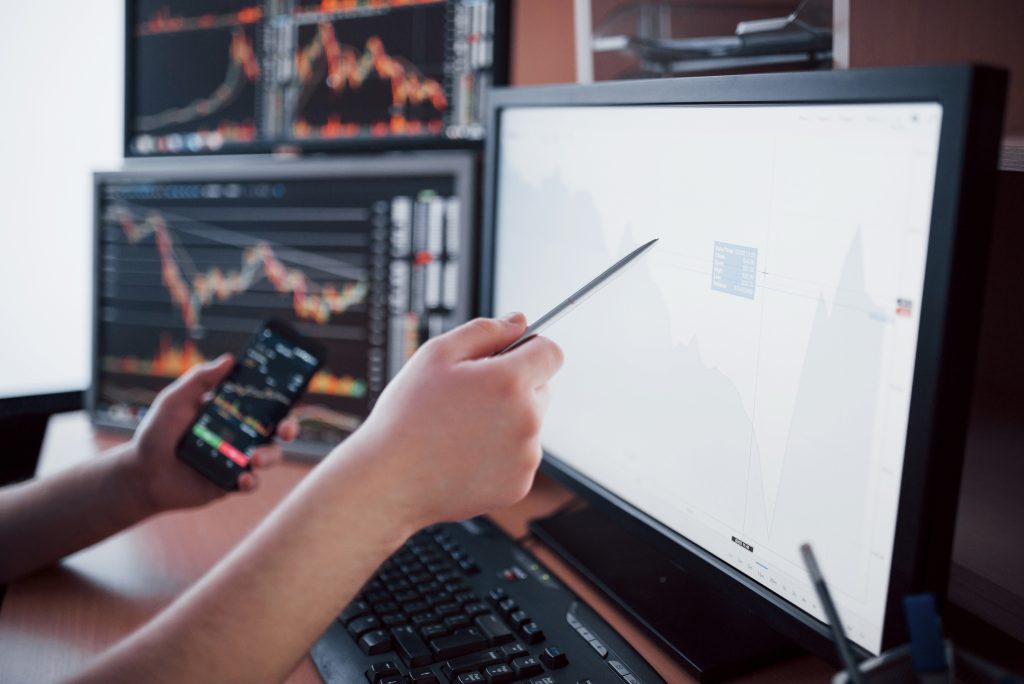
Options trading inherently carries more risk than traditional stock trading due to leverage, time decay, and complex pricing mechanisms. Traditional risk management relies on historical data, statistical models, and trader intuition. However, AI introduces a paradigm shift by processing vast amounts of real-time data and identifying market patterns that humans might miss.
Why AI is Revolutionizing Options Trading:
✅ Enhanced Predictive Analytics – AI models forecast price movements and volatility more accurately, helping traders adjust strategies in advance.
✅ Real-Time Risk Monitoring – AI continuously tracks market fluctuations, alerting traders to sudden risks and providing instant risk-mitigation strategies.
✅ Automated Decision Support – AI algorithms recommend optimal strike prices, expiration dates, and contract combinations based on current market conditions.
✅ Pattern Recognition – AI detects hidden market trends and signals, identifying opportunities and risks before they become obvious to human traders.
With these advantages, AI-driven risk management is fast becoming a necessity rather than a luxury in modern options trading.
Key AI Applications in Options Trading Risk Management
AI’s impact on risk management in options trading is primarily seen in three areas: predictive modeling, portfolio optimization, and automated risk mitigation.
1. AI-Driven Predictive Analytics
Traditional risk assessment methods often rely on historical volatility, implied volatility, and technical indicators. AI, on the other hand, processes real-time market data, news sentiment, economic indicators, and even social media trends to forecast potential price movements.
💡 Example: A trader using AI-based predictive analytics can receive real-time volatility forecasts that indicate whether an options contract is likely to become more or less profitable. This helps in adjusting positions before market swings occur.
2. Portfolio Optimization Using AI
Risk in options trading is often linked to an imbalanced portfolio—overexposure to a particular asset or misjudging market conditions. AI helps traders construct diversified options strategies by analyzing:
✅ Correlations between different assets
✅ Market sector rotations and risk-on/risk-off environments
✅ Expected returns under different volatility scenarios
💡 Example: AI can suggest adjustments to an options portfolio when it detects an increased risk of market downturns, ensuring traders hedge their positions before a major shift happens.
3. AI-Powered Automated Risk Mitigation
Risk mitigation in options trading requires constant monitoring of changing conditions. AI can automate risk management by:
✅ Setting dynamic stop-loss orders based on market conditions
✅ Adjusting hedging strategies in response to volatility spikes
✅ Detecting anomalies that could indicate flash crashes or market manipulation
💡 Example: If an AI model detects unusual trading activity in an options contract (indicating potential market manipulation), it can alert the trader or automatically exit the position to minimize risk.
The Benefits of AI-Enhanced Risk Management
1. Reduced Emotional Trading
Human traders are often influenced by emotions such as fear and greed. AI removes emotional bias by making objective, data-driven decisions based on probabilities and trends.
2. Faster Decision-Making
Options trading requires quick reactions. AI can process vast amounts of data in milliseconds, allowing traders to respond to opportunities and risks faster than manual analysis ever could.
3. Higher Accuracy in Strategy Execution
With its ability to detect minute price movements and correlations, AI helps traders fine-tune their entry and exit points, optimizing profitability while controlling risks.
4. Adaptability to Market Conditions
AI models continuously learn from new data, adapting strategies as market conditions change. This ensures that trading strategies remain effective even during unpredictable market cycles.
Challenges and Considerations of AI in Options Trading
While AI provides many advantages, traders should be aware of certain challenges:
1. Data Quality and Model Reliability
AI’s effectiveness depends on the quality and quantity of data it processes. Poor data inputs can lead to inaccurate predictions, potentially increasing risk rather than reducing it.
2. Black-Box Decision-Making
Some AI models function as “black boxes,” meaning traders may not fully understand how decisions are made. Ensuring transparency in AI-driven trading strategies is crucial.
3. Over-Reliance on Automation
While AI enhances risk management, traders should not rely entirely on automation. Human oversight remains necessary to interpret market anomalies and unexpected events that AI models might misjudge.
4. Regulatory and Ethical Concerns
AI in financial markets is under increasing scrutiny. Regulations may evolve to limit how AI can be used in trading, requiring traders to stay updated on compliance requirements.
The Future of AI in Options Trading Risk Management
Looking ahead, AI’s role in risk management will continue to expand, with new advancements such as:
✅ Deep Reinforcement Learning – AI models that learn from past market behavior to create self-improving trading strategies.
✅ Quantum Computing Integration – Faster calculations for real-time risk assessment and trade execution.
✅ AI-Powered Sentiment Analysis – Analyzing global news, political events, and investor sentiment to predict market reactions before they happen.
✅ AI-Driven Options Strategy Simulations – Running thousands of risk simulations in seconds to identify the safest and most profitable options trades.
As AI evolves, its ability to enhance decision-making in options trading will become even more powerful, helping traders navigate uncertainty with precision.
Final Thoughts: AI as a Game-Changer in Risk Management
AI is transforming risk management in options trading, making decision-making smarter, faster, and more accurate. By leveraging AI-powered predictive analytics, automated risk mitigation, and portfolio optimization, traders can enhance profitability while reducing exposure to unnecessary risk.
However, the best approach involves a combination of AI-driven insights and human expertise—ensuring that traders remain in control while benefiting from cutting-edge technology. As AI continues to evolve, its role in shaping the future of options trading will only become more pronounced.